Continuous Hot Water Without Storage Tanks
Tankless Water Heaters for Commercial and Residential Properties that are Needing On-Demand Hot Water Without Recovery Delays!
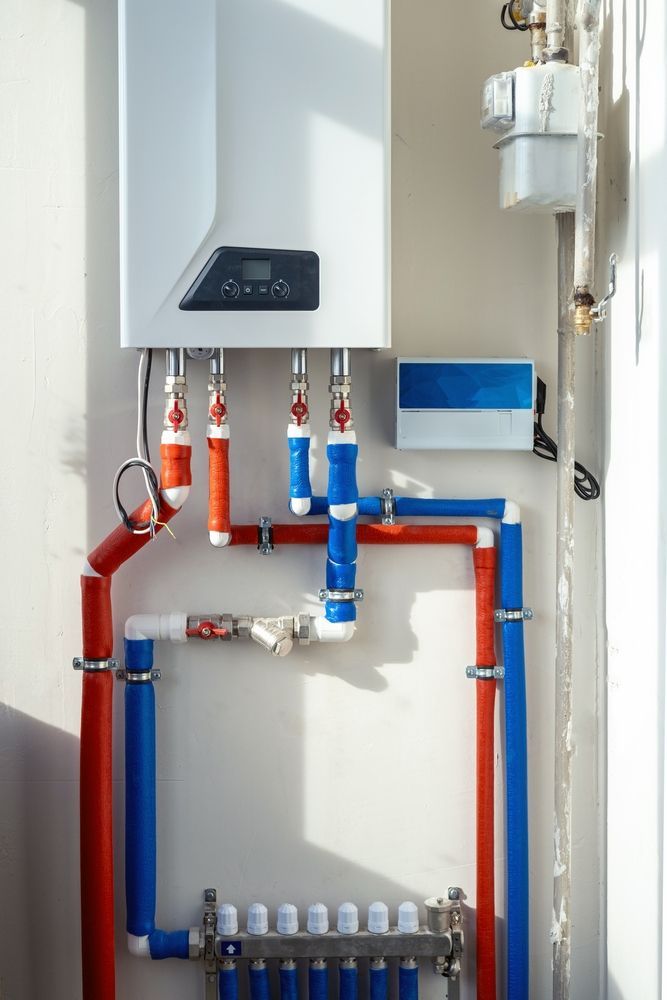
Henderson's commercial properties often struggle with traditional tank water heaters that cannot keep pace with extended demand periods, forcing users to wait between cycles while the tank reheats or requiring multiple units installed in parallel to meet peak loads. Tankless systems heat water only when flow is detected, running high-output burners or electric elements that raise inlet temperature to setpoint as water passes through a heat exchanger, delivering continuous supply without the capacity limitations or standby heat loss inherent to storage tanks. Ace Of Trades Plumbing installs tankless water heaters sized and configured to match actual flow rates and temperature rise requirements in facilities where hot water availability directly affects service delivery and customer satisfaction.
Installation requires calculating maximum simultaneous flow across all fixtures, determining the temperature rise needed between Henderson's groundwater temperature and the desired outlet setpoint, then selecting units with sufficient BTU or kilowatt ratings to meet that demand continuously. Gas units need adequate combustion air and venting sized for the higher BTU output compared to tank heaters, while electric models often require service panel upgrades to handle the instantaneous amperage draw when heating elements activate under full flow.
Request a consultation to evaluate whether your facility's demand pattern and infrastructure support tankless conversion.
How Tankless Systems Change Operations
Switching from tank to tankless eliminates the wait between heavy-use cycles since the system produces hot water continuously as long as flow continues, and removes the square footage occupied by large storage tanks, freeing space in mechanical rooms or utility areas. Energy costs drop because the system burns fuel or draws electricity only during actual use rather than maintaining a full tank at temperature around the clock, which matters most in facilities with inconsistent or seasonal demand patterns.
After installation, back-to-back showers in gyms or salons maintain steady temperature without the gradual cooling that signals tank depletion, commercial kitchens run dishwashers continuously without scheduling around recovery times, and you stop oversizing equipment to compensate for storage limitations. The system responds to demand rather than rationing a fixed reserve.
Tankless units require annual descaling in Henderson due to hard water mineral buildup on heat exchanger surfaces, which insulates the heating elements and reduces efficiency if not flushed with acidic solution. Units installed without proper filtration or softening in areas with severe hardness may need descaling every six months to maintain full output and prevent premature failure from scale accumulation blocking narrow heat exchanger passages.
What Property Owners Usually Ask
Commercial property managers considering tankless conversion typically need clarity on performance expectations and infrastructure requirements before committing to the upgrade.
What flow rate can a tankless water heater actually deliver?
Output depends on the temperature rise required—a unit rated for eight gallons per minute at a 40-degree rise in Henderson's moderate groundwater climate can supply multiple simultaneous showers comfortably, while colder inlet temperatures in winter reduce flow capacity since the system must add more heat per gallon.
How does installation cost compare to traditional tank replacement?
Tankless units cost more upfront due to higher equipment price and infrastructure upgrades like gas line upsizing, electrical panel expansion, or venting modifications, but energy savings typically recover the difference within five to seven years depending on usage intensity and utility rates.
Can tankless heaters handle simultaneous high-demand events?
Properly sized systems deliver consistent temperature under full load, but undersized units cannot raise water temperature adequately when flow exceeds capacity, resulting in lukewarm output during peak use, which is why accurate demand calculation during design prevents performance disappointment.
When should a commercial facility choose tankless over high-capacity storage tanks?
Facilities with sustained or unpredictable demand, limited mechanical room space, or high standby heat loss from maintaining large tank volumes benefit most from tankless, while operations with short, predictable peaks may find storage tanks more economical despite lower efficiency.
What maintenance do tankless systems need in the Las Vegas Valley?
Annual descaling flushes prevent mineral scale from reducing heat transfer efficiency and blocking heat exchanger channels, while inlet filter cleaning removes sediment that could damage flow sensors or restrict circulation through narrow passages.
Ace Of Trades Plumbing evaluates demand profiles and infrastructure capacity before recommending tankless installations, ensuring systems perform as expected under real operating conditions. Schedule an assessment by calling (702) 661-9665 to explore whether tankless technology fits your facility's hot water requirements and budget.